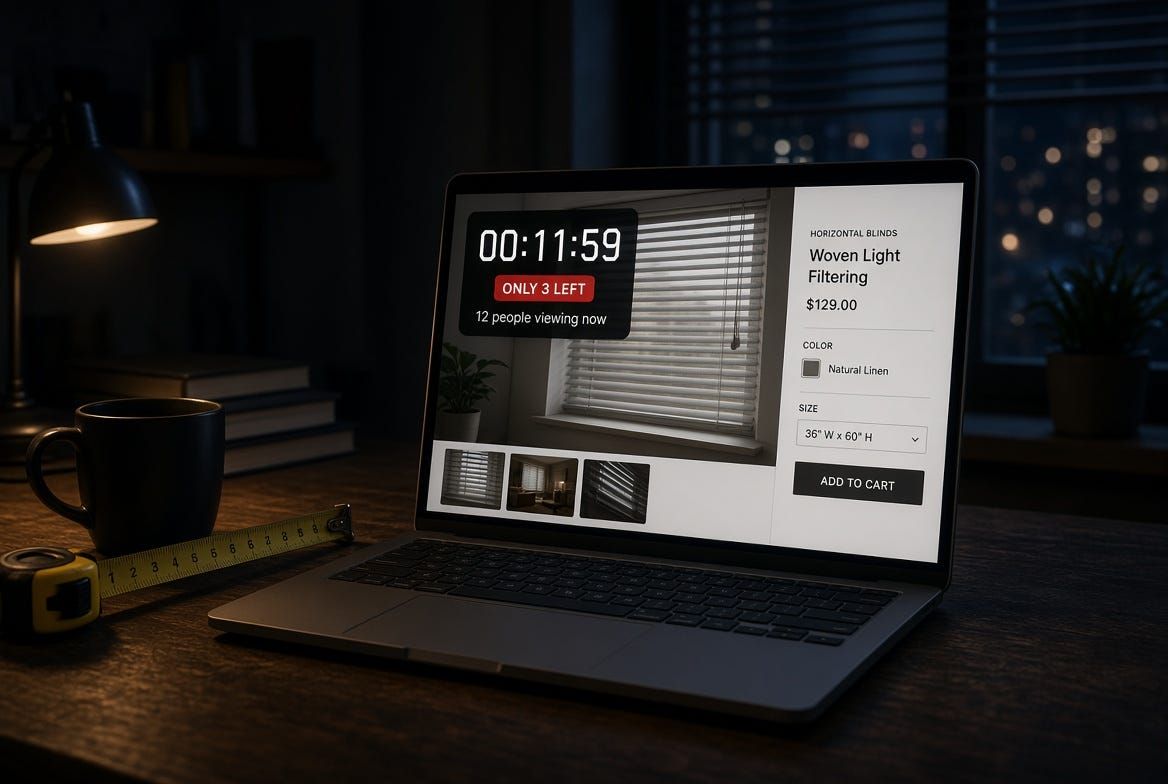
The clock is not telling you the time. It is telling you that comparison is a form of lateness.
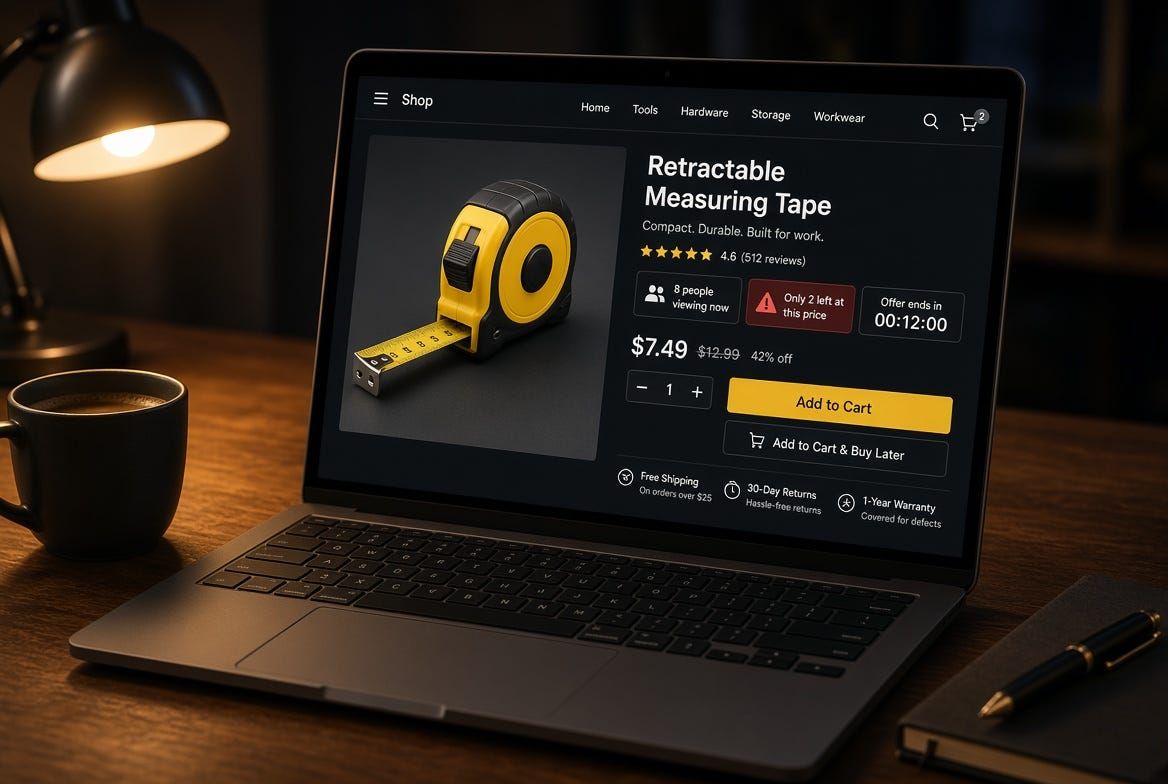
You opened the tab to measure a window, replace two shirts, or finish a receipt later. Then the page put a countdown in the corner, a badge that said three left, and a stranger who is “viewing this now.” Pause and you feel cheap. Refresh and watch the same twelve minutes come back, and you feel late to a joke everyone else already got. Buy, and you feel played. Walk away, and the badge follows you to the kitchen.
That is not a personality test. That is what a false deadline does to attention. It turns an organizing task into a pop quiz with a visible timer, then grades you for not sprinting.
What fake urgency actually is
Fake urgency — also called fake scarcity, manufactured FOMO, the reset-on-reload clock — is simple: the screen tells you time or stock is running out when the deadline, the inventory, or the “other shoppers” are not real. The merchant keeps the price. The interface keeps the minutes.
A real reserve can be honest. A theater seat expires because the seat is unique. A warehouse SKU usually is not. A “sale ending at midnight” is honest only if midnight changes the price. If midnight only changes the holiday name on the banner, the clock is costume jewelry.
The household specimen
Three years ago, this weekend, the public write-up cycle landed on SelectBlinds.
The complaint described a sitewide sale with an on-page countdown. When the timer hit zero, the sale did not end. It was replaced by a newly named sale with a comparable discount — always more than 30 percent off, typically close to 50 — and a fresh midnight clock. The cycle, plaintiffs said, ran more than a year. The company later agreed to a $10 million class settlement in the Central District of California.
Kelley Drye’s recap put the mechanism in one sentence: when the timers hit zero, the retailer launched a new sale “with a different name but a comparable discount, with an updated timer stating that the sale would expire at midnight the next day.”
Window coverings are not impulse candy. They are what you buy when you are trying to make a room usable. The interface did not argue about fabric or width. It argued about time. After the second or third midnight, testing whether the sale ends cost another day of measuring windows. Shame arrives as “I should have bought yesterday.”
That is why this pattern belongs in a household series. It does not have to win the argument about value if it can win the argument about the clock.
The regulator who opened the source code
In May, Singapore’s Competition and Consumer Commission named the same trick in code.
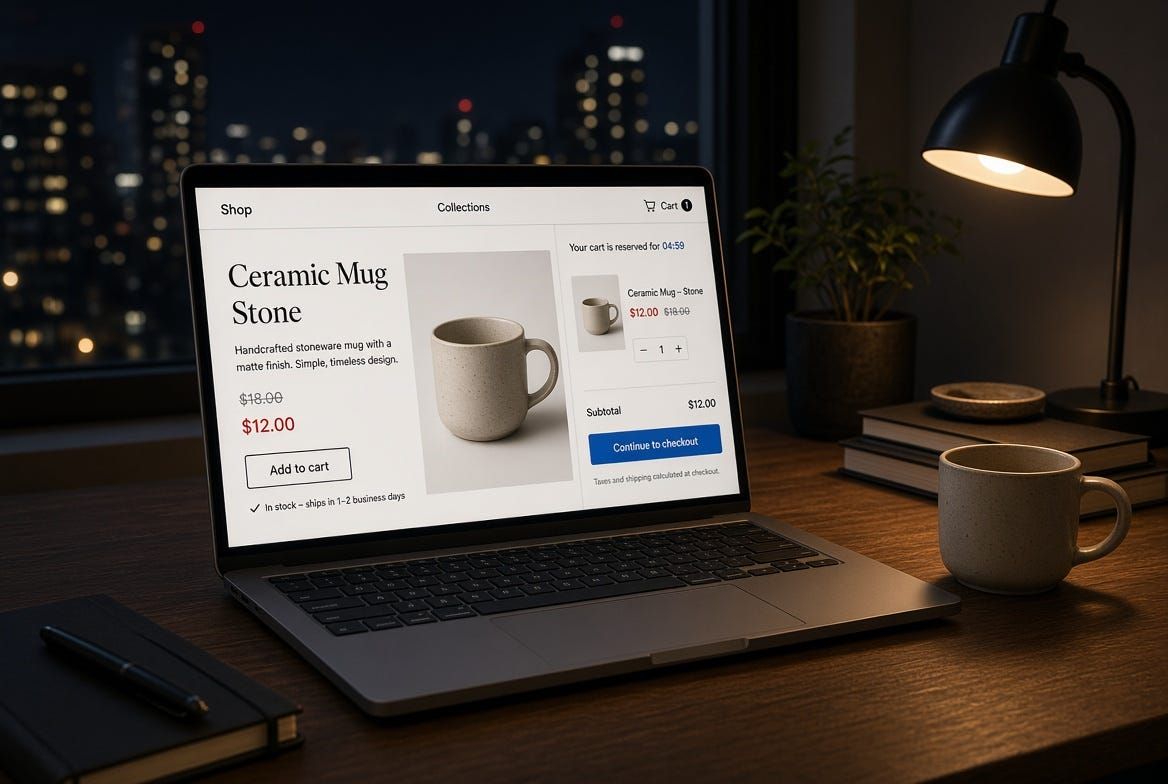
Boarding Gate showed “XX people are looking at this product right now” and “XX people added this item to cart.” CCS read the source and found the numbers were randomly generated. Origin Sleep showed “Other people want this” plus checkout clocks that said the order was reserved for a few minutes. CCS said the timer had no effect on stock or the ability to finish the buy. The same shop ran “up to 40% off” for nearly two years under rotating names: Flash Sale, Valentine’s Day, CNY, 3.3 Mega Sale. Light In The Box labeled goods “Almost sold out” on a made-to-order model with little or no standing inventory.
CCS chief executive Alvin Koh said the quiet part: “Dark patterns are insidious as they are difficult to detect and erode consumer trust in the digital marketplace.”
That case matters because the fake number was not inferred from a screenshot. It was read out of the page. Fake scarcity and fake social proof are the same lever with two labels. “Three people are looking” is scarcity of attention. “Almost sold out” is scarcity of units. “Reserved for 04:59” is scarcity of minutes. All three shrink the decision window until comparison shopping feels like cutting a queue that does not exist.
The mattress that survived its own deadline
Mattresses are high-friction goods. You cannot trial one in two minutes, so the interface substitutes a two-minute clock for a two-week thought.
On May 22, 2026, the UK High Court confirmed that Emma Sleep had broken consumer law with misleading countdown timers, false “high demand” messages, and discount claims that created pressure to buy. Hayley Fletcher, the CMA’s Senior Director of Consumer Protection, said the sentence out loud: “using fake countdown clocks or misleading ‘discounts’ to push people into spending is illegal.”
Australia had already priced the same mechanism. In April, the Federal Court ordered Emma Sleep companies to pay a combined $15 million. ACCC Commissioner Luke Woodward said the timer “created a false sense of urgency about the offer by using a countdown timer that reset itself.”
Two jurisdictions. One product category. One design choice: a clock that does not end the price. The daily renamed sale trains you to treat every calendar holiday as a last chance, which empties the word “last.” The person who stops checking whether July 3 was real is not “bad at shopping.” Checking was made expensive on purpose.
The shopkeeper defaults
Most examples show the shopper view. Hurrify, a Shopify countdown app later documented by Harry Brignull, showed the merchant dropdown. Storefront copy said the sale ended when the timer hit zero. The admin default for “Action When Timer ends” was “Run the campaign all over again (Evergreen).” Brignull’s is still the cleanest: the timer is purely cosmetic. It counts to zero, returns to the start, and repeats. In other words, it is a lie.
The shopper who opens a private window and watches 11:59 come back does not think, “the default dropdown was Evergreen.” They think, “I am the kind of person who falls for clocks.” Keep the human on the right side of that sentence. The dropdown is the actor.
The FTC named the same gap in 2022: “countdown timers designed to make consumers believe they only have a limited time to purchase a product or service when the offer is not actually time-limited.”
That sentence is still how American lawyers talk about the clock. The report does not claim every timer is a lie. It names the distance between the impression and the offer. Fake urgency is a cheap way to buy a worse cognitive state — smaller working memory, narrower comparison set, default button wins — without holding a real auction.
The two-minute counter
Do this before the overlay talks you into finishing the buy.
Screenshot the timer, the “only N left,” and the price.
Hard-refresh or open the same URL in a private window. If 12:00 returns, the deadline was a skin. If “3 left” is still 3, the stock badge is a skin.
If a subscription or trial is wearing the countdown, leave the product page. Manage billing in the actual account list — Apple Settings, Google Play subscriptions, Amazon membership — not inside the modal.
Refuse the reservation clock as a reason to skip a price check. Refuse “your order is reserved for 04:59” when nothing was reserved. Refuse the second sale that is the first sale with a wig.
Do not argue with chat about whether the timer is “just marketing.” Do not create an account so you can “hold” the price. Do not stay on the page to watch the clock die. If it is fake, it will be born again. If it is real, you already have the screenshot. Capture, then decide later, off the clock.
What today is for
September 27 sits three years after the Select Blinds write-ups and a season after the Emma Sleep and CCS cases. The pattern does not need a substitute. Fake urgency is the one that interrupts file work most cleanly. It turns a browser tab into a test you can fail.
Confirmshaming would have moralized the decline button. A roach motel would have hidden the exit. Drip pricing would have moved the number. Tonight the number stays put and the minutes are the lie.
The feeling to log is not “I am bad at computers.” It is “the page borrowed my pulse.” The evergreen sale is a liturgy: every midnight, a rebirth; every holiday, a last chance. Learned helplessness is what happens when you stop bringing a second window.
The counter-ritual is small enough to keep. One refresh. One screenshot. One walk to another room.
This is the first Daily Dark Pattern Field Note. If it is useful, it continues tomorrow.
If you hit a clock today, reply with three lines: what you were trying to do, what the screen did, and whether you gave in, stopped, or got through.